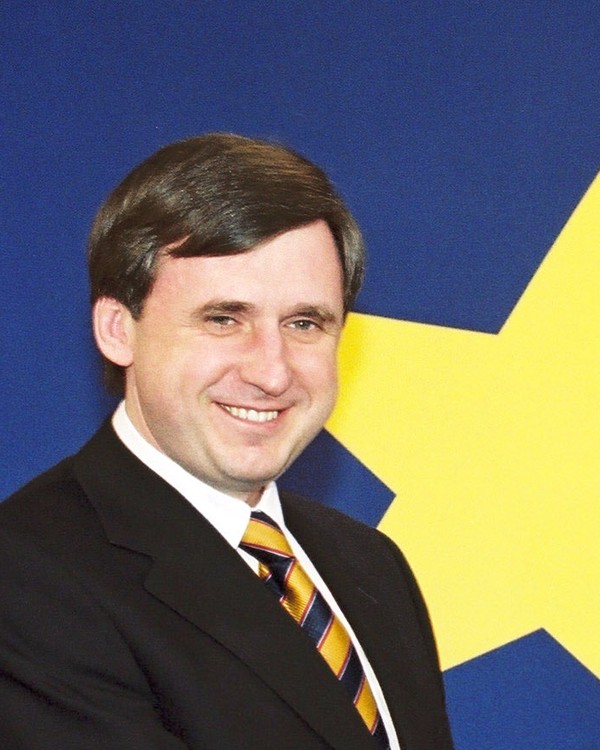

Prime Minister no. 4
Ion Sturza
Term ended- Term duration
- 284 days
- PM affiliation
- Alliance for Democracy and Reforms
ADR denotes an alliance; personal affiliation needs confirmation.
- Born
- 9 May 1960, Pîrjolteni, raionul Călărași, RSS Moldovenească
- Previous office
- Deputy Prime Minister and Minister of Economy and Reforms (1998–1999)
Cabinet
Not officially confirmed
The points below come from the press or encyclopedias and could not be checked against Parliament decisions, decrees or the Official Gazette.
- The mandate starts here on 12 March 1999 (investiture). Wikipedia’s list counts it from 19 February 1999, the date of his designation, before the 3 March vote was invalidated by the Constitutional Court.
- The 3 March 1999 vote: 51 in favour; the number against differs between sources (37 or 50). The 12 March vote (52–49) comes from contemporary press, not a Parliament decision.
- President
- Petru Lucinschi
- Political backing
- Alliance for Democracy and Reforms (ADR), which lost its majority during 1999.
- How the mandate began
- Designated prime minister by President Lucinschi on 19 February 1999. On 3 March 1999 Parliament approved the government with 51 votes in favour; the number against differs between sources (37 per Radio Free Europe; Jamestown speaks of 51-50). The Constitutional Court invalidated the vote, ruling that at least 52 votes were needed (Jamestown). Sturza was designated again and on 12 March 1999 the cabinet's composition and programme were approved by 52 votes to 49 (Jamestown; Radio Free Europe: 51 deputies present plus a written vote from Ilie Ilașcu, imprisoned in Tiraspol), after which the ministers were sworn in.
- How it ended
- Dismissed by Parliament through a no-confidence motion on 9 November 1999 with 58 votes (40 Communists, 9 Popular Front members and 9 pro-presidential defectors from the governing parties, per Jamestown of 10 November 1999; Radio Free Europe). It remained in office until the Braghiș government was invested on 21 December 1999.
Events
- 19 February 1999: Ion Sturza is designated prime minister by Petru Lucinschi.
- 3 March 1999: Parliament approves the government with 51 votes in favour (37 against per Radio Free Europe); the vote is later invalidated by the Constitutional Court, which requires at least 52 votes.
- 12 March 1999: the government is approved by 52 votes to 49 and is sworn in.
- 1999: territorial, fiscal and agrarian reforms are launched, along with privatisations to strategic investors.
- 1999: the country goes through an energy crisis amid insolvency.
- 1999: Parliament grants the Bulgarian minority's demand for a separate county, Taraclia, with votes from the communists and centrists.
- 5 November 1999: a new majority votes against privatising some wine and tobacco enterprises; the IMF and World Bank announce a suspension of financing.
- 9 November 1999: the government is dismissed by 58 votes.
- 21 December 1999: the Braghiș government is invested.
Cabinet composition
Cabinet composition: Sturza Cabinet 22 members
| Name | Position |
|---|---|
| Ion Sturza | Prim-ministru |
| Nicolae Andronic | Prim-viceprim-ministru |
| Oleg Stratulat | Viceprim-ministru pentru problemele politicii sociale și științei |
| Alexandru Muravschi | Viceprim-ministru, ministru al economiei și reformelor |
| Vlad Filat | Ministru de stat |
| Anatol Arapu | Ministru al finanțelor |
| Alexandra Can | Ministru al industriei și comerțului |
| Victor Cheibaș | Ministru al transporturilor și comunicațiilor |
| Mihai Severovan | Ministru al dezvoltării teritoriului, construcțiilor și gospodăriei comunale |
| Nicolae Tăbăcaru | Ministru al afacerilor externe |
| Valeriu Bulgari | Ministru al agriculturii și industriei prelucrătoare |
| Arcadie Capcelea | Ministru al mediului |
| Anatol Gremalschi | Ministru al educației și științei |
| Eugen Gladun | Ministru al sănătății |
| Vladimir Gurițenco | Ministru al muncii, protecției sociale și familiei |
| Ghenadie Ciobanu | Ministru al culturii |
| Tudor Botnari | Ministru al securității naționale |
| Valeriu Pasat | Ministru al apărării |
| Victor Catan | Ministru al afacerilor interne |
| Ion Păduraru | Ministru al justiției |
| Gheorghe Tabunșcic | Guvernator al Găgăuziei |
| Serafim Urechean | Primar general al municipiului Chișinău |
Initial composition; later changes may be missing. Position titles are given in Romanian, as in the source. Source: alegeri.md (secondary source).
Education
An economist, he graduated from the Faculty of Economics of Moldova State University.
Background
Party: Alliance for Democracy and Reforms (1998–1999)
Ion Sturza was born on 9 May 1960 in Pîrjolteni (Călărași district) and studied economics in Chișinău. He worked in foreign economic relations and in 1987 helped establish the foreign-trade association Moldex. In 1991 he founded the company Incon, which grew into a major financial-industrial group, and he ran the bank FinComBank.
He entered politics in 1998, was elected to parliament and, on 22 May 1998, named deputy prime minister and minister of economy and reforms in the Ciubuc government. After Ciubuc resigned, President Lucinschi designated him prime minister on 19 February 1999.
His cabinet, made up of young reform-minded ministers, launched territorial, fiscal and agrarian reforms and carried out privatisations. The term was short and tense: an energy crisis, the dispute over Taraclia county and the loss of the ADR majority. It was dismissed on 9 November 1999 after the new majority voted against privatisations and international lenders suspended financing.
After office
He returned to business: he set up Rompetrol Moldova (2002), became a vice-president of the Rompetrol group (2005) and left the group in 2009. On 21 December 2015 President Timofti designated him prime minister again, but the 4 January 2016 investiture session failed for lack of a quorum.