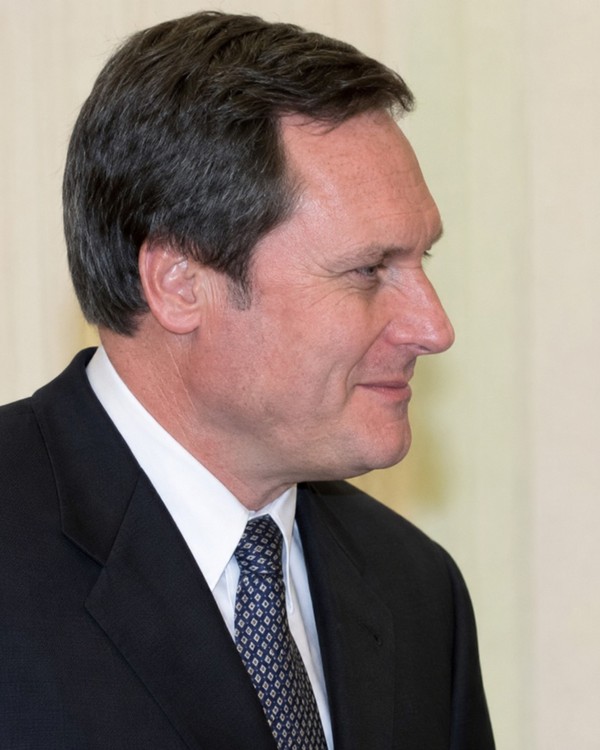

Prime Minister no. 5
Dumitru Braghiș
Term ended- Term duration
- 485 days
- PM affiliation
- Independent
- Born
- 28 December 1957, Grătiești, RSS Moldovenească (azi în municipiul Chișinău)
- Previous office
- First Deputy Minister of Economy and Reforms (1998–1999)
Cabinet
Not officially confirmed
The points below come from the press or encyclopedias and could not be checked against Parliament decisions, decrees or the Official Gazette.
- Investiture: 21 December 1999 (57 votes, per the press); ro.wikipedia gives 23 December. The official decision was not seen. The end of the mandate (19 April 2001) was not confirmed from an act.
- His non-party status during the mandate comes from Wikipedia’s list.
- President
- Petru Lucinschi, apoi Vladimir Voronin (din aprilie 2001)
- Political backing
- A majority of the Party of Communists, the Christian-Democratic People's Front and independents; a government of technocrats.
- How the mandate began
- Designated by President Lucinschi on 15 December 1999 as the third candidate, after Valeriu Bobuțac and Vladimir Voronin failed (7 December: 48 of 52 votes needed). Invested on 21 December 1999 with 57 votes according to Radio Free Europe ('57 communist deputies'); the 23 December date in the text of Romanian Wikipedia is not supported by any other source.
- How it ended
- After the early elections of 25 February 2001, won by the communists (71 of 101 seats), Braghiș handed over to the Vasile Tarlev government on 19 April 2001. The Braghiș Alliance won 19 seats.
Events
- 12 November 1999: Valeriu Bobuțac is designated prime minister but withdraws after failing to gather the needed votes (22 November: only 48 votes in favour).
- 7 December 1999: the Voronin cabinet fails its investiture vote (48 of 52 votes needed).
- 15 December 1999: Lucinschi proposes Braghiș as a compromise candidate.
- 21 December 1999: the government is invested (57 votes per press; Romanian Wikipedia also gives 23 December).
- 15 March 2000: Andrei Cucu becomes deputy prime minister and minister of economy and reforms.
- 22 November 2000: Nicolae Cernomaz is appointed foreign minister.
- 25 February 2001: early parliamentary elections; the Braghiș Alliance wins 19 seats, the communists 71.
- 2001: Braghiș runs for the presidency and receives only 15 votes in Parliament (16.85% per Romanian Wikipedia).
- 19 April 2001: the Tarlev government takes over.
Cabinet composition
Cabinet composition: Braghiș Cabinet 19 members
| Name | Position |
|---|---|
| Dumitru Braghiș | Prim-ministru |
| Valeriu Cosarciuc | Viceprim-ministru |
| Lidia Guțu | Viceprim-ministru |
| Eugeniu Șlopac | Viceprim-ministru, ministru al economiei și reformelor |
| Mihail Manoli | Ministru al finanțelor |
| Ion Leșanu | Ministru al industriei și energeticii |
| Ion Russu | Ministru al agriculturii și industriei prelucrătoare |
| Afanasie Smochin | Ministru al transporturilor și comunicațiilor |
| Arcadie Capcelea | Ministru al mediului și amenajării teritoriului |
| Ion Guțu | Ministru al educației și științei |
| Vasile Parasca | Ministru al sănătății |
| Valerian Revenco | Ministru al muncii, protecției sociale și familiei |
| Ghenadie Ciobanu | Ministru al culturii |
| Valeria Șterbeț | Ministru al justiției |
| Nicolae Tăbăcaru | Ministru al afacerilor externe |
| Vladimir Țurcan | Ministru al afacerilor interne |
| Boris Gamurari | Ministru al apărării |
| Dmitri Croitor | Guvernator al Găgăuziei |
| Serafim Urechean | Primar general al municipiului Chișinău |
Initial composition; later changes may be missing. Position titles are given in Romanian, as in the source. Source: alegeri.md (secondary source).
Education
A power engineer, he graduated from the Sergei Lazo Polytechnic Institute in Chișinău (1980) and later earned a doctorate in economics.
Background
Party: Non-party during the mandate; later the Braghiș Alliance (2001) and the Social Democracy Party of Moldova (founded 2006)
Dumitru Braghiș was born on 28 December 1957 in Grătiești, near Chișinău, into a peasant family. A power engineer by training, he worked at the Chișinău Tractor Plant, then in the Komsomol structures (1981–1992) and as an instructor of the Moldovan Communist Party Central Committee. He was a People's Deputy of the USSR (1989–1991).
After 1992 he moved into economic administration: deputy director at Moldova Exim, a department head in the Ministry of Economy and, from 1997, deputy minister, then first deputy minister of economy and reforms from 1998. He was a low-profile economic official rather than a political figure.
The crisis that followed the Sturza government's dismissal brought him to the fore: after Bobuțac and Voronin failed to win Parliament's vote, Lucinschi put him forward as a compromise solution. The alternative was dissolving Parliament. His cabinet of technocrats governed for 16 months in a tense political climate and was followed by Vasile Tarlev's communist government.
After office
He served as a member of parliament (2001–2009), founded the Social Democracy Party of Moldova in 2006, ran as an independent for mayor of Chișinău in 2005 (20.65%), worked in the private sector (2009–2013) and was ambassador to Russia (2015–2017), then to China and Vietnam (2020–2025).