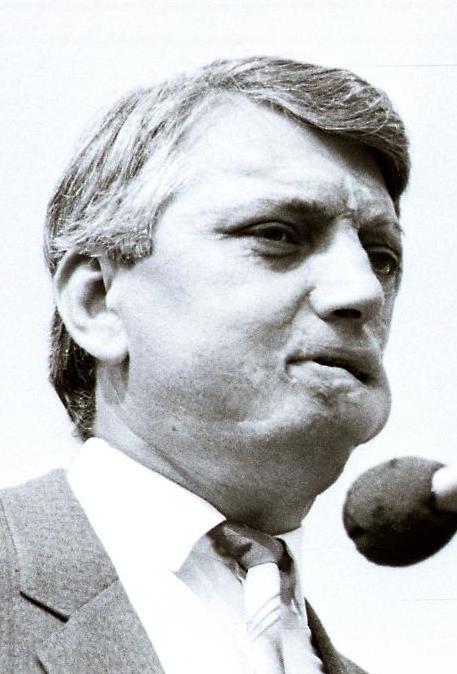

Prime Minister no. 1
Valeriu Muravschi
Term ended- Term duration
- 400 days
- PM affiliation
- Popular Front
- Born
- 31 July 1949, Sirota, raionul Orhei, RSS Moldovenească
- Died
- 8 April 2020, Chișinău
- Previous office
- Deputy Prime Minister and Minister of Finance in the Mircea Druc cabinet (1990–1991)
Cabinet
Not officially confirmed
The points below come from the press or encyclopedias and could not be checked against Parliament decisions, decrees or the Official Gazette.
- Start of the mandate: 28 May 1991 (date of appointment as prime minister; ro.wikipedia and alegeri.md) or 27 August 1991 (en.wikipedia, after independence was declared). We use 28 May 1991. The official decision and vote count were not consulted.
- His party affiliation during the mandate (Popular Front) comes from English Wikipedia.
- President
- Mircea Snegur
- Political backing
- No formal coalition identified; a government formed within the legislature elected in 1990, after the Druc cabinet.
- How the mandate began
- Appointed prime minister on 28 May 1991, still in the Moldavian SSR; he stayed on after independence was declared (27 August 1991). The date and count of the parliamentary vote could not be verified.
- How it ended
- President Snegur designated Andrei Sangheli as prime minister on 1 July 1992, in line with the Yeltsin–Snegur arrangement calling for a conciliation government, and the Muravschi cabinet's term ended with that change.
Events
- 28 May 1991: appointed prime minister, following the Druc government.
- 27 August 1991: Moldova declares independence and the government continues under the new status.
- 2 March 1992: Moldova is admitted as a full member of the United Nations.
- 15 March 1992: the government appeals to residents of the left-bank districts of the Dniester to respect state authorities.
- 28 March 1992: a state of emergency is declared across the country (other sources say 29 March) amid separatist attacks in Transnistria.
- 1 April 1992: Interior Ministry forces are sent to Bender, the first official armed action of the conflict, per Romanian Wikipedia.
- 19–21 June 1992: fighting in Bender, ended by the intervention of Russia's 14th Army.
- 1 July 1992: Andrei Sangheli is designated prime minister and the Muravschi cabinet's term ends.
Cabinet composition
Cabinet composition: Muravschi Cabinet 24 members
| Name | Position |
|---|---|
| Valeriu Muravschi | Prim-ministru |
| Constantin Oboroc | Prim-viceprim-ministru |
| Ion Ciubuc | Prim-viceprim-ministru |
| Andrei Sangheli | Prim-viceprim-ministru, ministru al agriculturii și alimentației |
| Constantin Tampiza | Viceprim-ministru, ministru al economiei și finanțelor[1] |
| Valeriu Cebotari | Viceprim-ministru |
| Gheorghe Efros | Viceprim-ministru |
| Filip Zubatîi | Ministru de stat |
| Alexandru Barbu | Ministru al industriei și energeticii |
| Vasile Cuhal | Ministru al construcțiilor |
| Valerii Kozlov | Ministru al transporturilor |
| Tudor Slănină | Ministru al comerțului și resurselor materiale[2] |
| Timofei Andros | Ministru al informaticii, informațiilor și telecomunicațiilor |
| Gheorghe Ghidirim | Ministru al sănătății |
| Ion Ungureanu | Ministru al culturii și cultelor |
| Nicolae Mătcaș | Ministru al științei și învățământului |
| Alexei Barbăneagră | Ministru al justiției |
| Eugenia Mihailov | Ministru al muncii și protecției sociale |
| Andrei Cheptine | Ministru al relațiilor economice externe[3] |
| Constantin AntociIon Costaș (până la 5 februarie 1992) | Ministru al afacerilor interne |
| Nicolae Țâu | Ministru al afacerilor externe |
| Anatol PlugaruTudor Botnari (până la 29 august 1991) | Președinte al Comitetului pentru securitatea statului |
| Ion Costaș | Ministru al apărării[4] |
| Petru Sandulachi | Ministru al tineretului, sportului și turismului[5] |
Initial composition; later changes may be missing. Position titles are given in Romanian, as in the source. Source: alegeri.md (secondary source).
Education
He graduated from the Faculty of Economics of the Sergei Lazo Polytechnic Institute in Chișinău in 1971.
Background
Party: Earlier associated with the Popular Front of Moldova; founder and chairman of the National Christian Democratic Peasants’ Party (1999–2002)
Valeriu Muravschi was born on 31 July 1949 in the village of Sirota, Orhei district. After graduating in economics from the Chișinău Polytechnic (1971) he spent well over a decade in the economic apparatus of the Moldavian SSR: first at the State Price Committee, then in the Ministry of the Building Materials Industry, where he headed the pricing and finance departments in turn.
In 1990 he became deputy prime minister and finance minister in Mircea Druc's government, and on 28 May 1991 he was appointed prime minister. His profile was that of an economist-technocrat from the administration rather than a party leader.
His term spanned the declaration of independence, admission to the UN and, above all, the escalation of the Transnistria conflict in spring 1992, which dominated the government's agenda. After leaving office he served as a member of parliament (1998–2001) and chaired its budget and finance committee, founded a Christian-democratic peasant party, and then joined the Liberal Party created in 2002.
After office
He was a member of parliament from 1998 to 2001, founded the National Christian Democratic Peasants' Party in 1999 and became a vice-president of the Liberal Party after the 2002 merger; he received the Order of Work Glory in 1999 and died in Chișinău in April 2020.