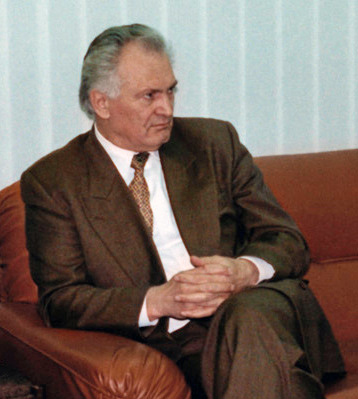

Prime Minister no. 3
Ion Ciubuc
Term ended- Cumulative time in office
- 777 days
- PM affiliation
- Affiliation unresolved
The catalogue assigns ADR, but the biography describes government backing. Personal affiliation is unconfirmed.
- Born
- 29 May 1943, Hădărăuți, județul Hotin (azi raionul Ocnița)
- Died
- 29 January 2018, Chișinău
- Previous office
- President of the Court of Accounts (1994–1997)
Cabinets
Not officially confirmed
The points below come from the press or encyclopedias and could not be checked against Parliament decisions, decrees or the Official Gazette.
- The 1 February 1999 resignation and the formal end on 12 March 1999 appear in the press and on alegeri.md; the cabinet was in caretaker mode between the two dates. The first cabinet starts on 24 January (here) or 25 January 1997 (alegeri.md). Vote counts for 1997 and 1998 are unconfirmed.
- Ciubuc’s personal party affiliation is not clearly documented; the government was backed by the Alliance for Democracy and Reforms (ADR).
- President
- Petru Lucinschi
- Political backing
- Formed before the 1998 elections; detailed parliamentary support not verified.
- How the mandate began
- Designated by President Lucinschi on 16 January 1997; Parliament granted the vote of confidence and approved the programme on 24 January 1997. The vote count could not be verified.
- How it ended
- Replaced by the Ciubuc II cabinet on 22 May 1998, after the 22 March 1998 parliamentary elections.
- President
- Petru Lucinschi
- Political backing
- Alliance for Democracy and Reforms (ADR), the first centre-right government since 1991.
- How the mandate began
- Designated on 6 May 1998 after the parliamentary elections; Parliament granted the vote of confidence on 22 May 1998. The vote count could not be verified.
- How it ended
- Ciubuc resigned on 1 February 1999 (confirmed by Radio Free Europe and by the Jamestown Monitor of 4 March 1999); the government stayed on only in a caretaker capacity until the Sturza government was invested on 12 March 1999. The 'end' field (12 March) is the handover to the Sturza government; the resignation itself dates from 1 February.
Events
- 16 January 1997: designated prime minister by President Lucinschi; on 24 January the government wins the vote of confidence.
- 1997: the government prioritises paying wages and pensions and approves the Social Investment Fund (FISM), with World Bank participation.
- August 1997: a feasibility study for the Cahul–Giurgiulești railway is approved and the National Energy Regulatory Agency (ANRE) is created.
- 22 March 1998: parliamentary elections; on 6 May Ciubuc is designated again and on 22 May the Ciubuc II government wins its confidence vote.
- November 1998: the government approves the strategy of 'a small economy open to the world'.
- 1998–1999: the Russian financial crisis hits Moldova's economy.
- 1 February 1999: Ciubuc resigns as prime minister.
- 12 March 1999: the Sturza government is installed.
Cabinet composition
Cabinet composition: Ciubuc I Cabinet 21 members
| Name | Position |
|---|---|
| Ion Ciubuc | Prim-ministru |
| Valeriu Bulgari | Viceprim-ministru |
| Ion Guțu | Viceprim-ministru, ministru al economiei și reformei |
| Nicolae Cernomaz | Ministru de stat |
| Mihai Popov | Ministru al afacerilor externe |
| Mihail Plămădeală | Ministru al afacerilor interne |
| Gheorghe Lungu | Ministru al agriculturii și alimentației |
| Valeriu Pasat | Ministru al apărării |
| Ion Casian | Ministru al comunicațiilor și informaticii |
| Ghenadie Ciobanu | Ministru al culturii |
| Mihai Severovan | Ministru al dezvoltării teritoriului, construcțiilor și gospodăriei comunale |
| Valeriu Chițan | Ministru al finanțelor |
| Grigore Triboi | Ministru al industriei și comerțului |
| Iacov Popovici | Ministru al învățământului, tineretului și sportului |
| Vasile Sturza | Ministru al justiției |
| Dumitru Nidelcu | Ministru al muncii, protecției sociale și familiei |
| Ceslav Ciobanu | Ministru al privatizării și administrării proprietății de stat |
| Mihai Magdei | Ministru al sănătății |
| Tudor Botnari | Ministru al securității naționale |
| Vasile Iovv | Ministru al transporturilor și gospodăriei drumurilor |
| Gheorghe Tabunșcic | Guvernator al Găgăuziei |
Initial composition; later changes may be missing. Position titles are given in Romanian, as in the source. Source: alegeri.md (secondary source).
Cabinet composition: Ciubuc II Cabinet 22 members
| Name | Position |
|---|---|
| Ion Ciubuc | Prim-ministru |
| Ion Sturza | Viceprim-ministru, ministru al economiei și reformelor |
| Valentin Dolganiuc | Viceprim-ministru pentru problemele politicii industriale |
| Oleg Stratulat | Viceprim-ministru pentru problemele politicii sociale și științei |
| Nicolae Andronic | Viceprim-ministru pentru probleme de drept |
| Nicolae Cernomaz | Ministru de stat |
| Anatol Arapu | Ministru al finanțelor |
| Ion Tănase | Ministru al industriei și comerțului |
| Tudor Leancă | Ministru al transporturilor și comunicațiilor |
| Mihai Severovan | Ministru al dezvoltării teritoriului, construcțiilor și gospodăriei comunale |
| Nicolae Tăbăcaru | Ministru al afacerilor externe |
| Valeriu Bulgari | Ministru al agriculturii și industriei prelucrătoare |
| Arcadie Capcelea | Ministru al mediului |
| Anatol Gremalschi | Ministru al educației și științei |
| Eugen Gladun | Ministru al sănătății |
| Vladimir Gurițenco | Ministru al muncii, protecției sociale și familiei |
| Ghenadie Ciobanu | Ministru al culturii |
| Tudor Botnari | Ministru al securității naționale |
| Valeriu Pasat | Ministru al apărării |
| Victor Catan | Ministru al afacerilor interne |
| Ion Păduraru | Ministru al justiției |
| Gheorghe Tabunșcic | Guvernator al Găgăuziei |
Initial composition; later changes may be missing. Position titles are given in Romanian, as in the source. Source: alegeri.md (secondary source).
Education
He graduated in 1970 from the Odesa Agricultural Institute (agrarian economics) and later earned a doctorate in economics.
Background
Party: Government backed by the Alliance for Democracy and Reforms (ADR)
Ion Ciubuc was born on 29 May 1943 in Hădărăuți. He studied agrarian economics in Odesa and began his career on collective farms, then in the Soviet party and state apparatus, including as first secretary of the Vulcănești district committee and first deputy chairman of the Moldavian Gosplan.
After 1990 he was first deputy prime minister in the Muravschi government, then first deputy minister of foreign affairs and of the economy, and on 27 December 1994 became the first president of the Court of Accounts. President Lucinschi designated him prime minister in January 1997.
He led two consecutive governments until February 1999. His term was dominated by wage and pension arrears, budget problems and the fallout of the 1998 Russian financial crisis. He was nicknamed 'Kamikaze'. He resigned on 1 February 1999, lacking sufficient parliamentary support and at odds with the ADR over deputy-minister appointments.
After office
He withdrew from front-line politics after resigning; he was vice-president of the Court of Accounts (July 1999–May 2000), later director of the company Interagroinvest, and died in Chișinău on 29 January 2018.