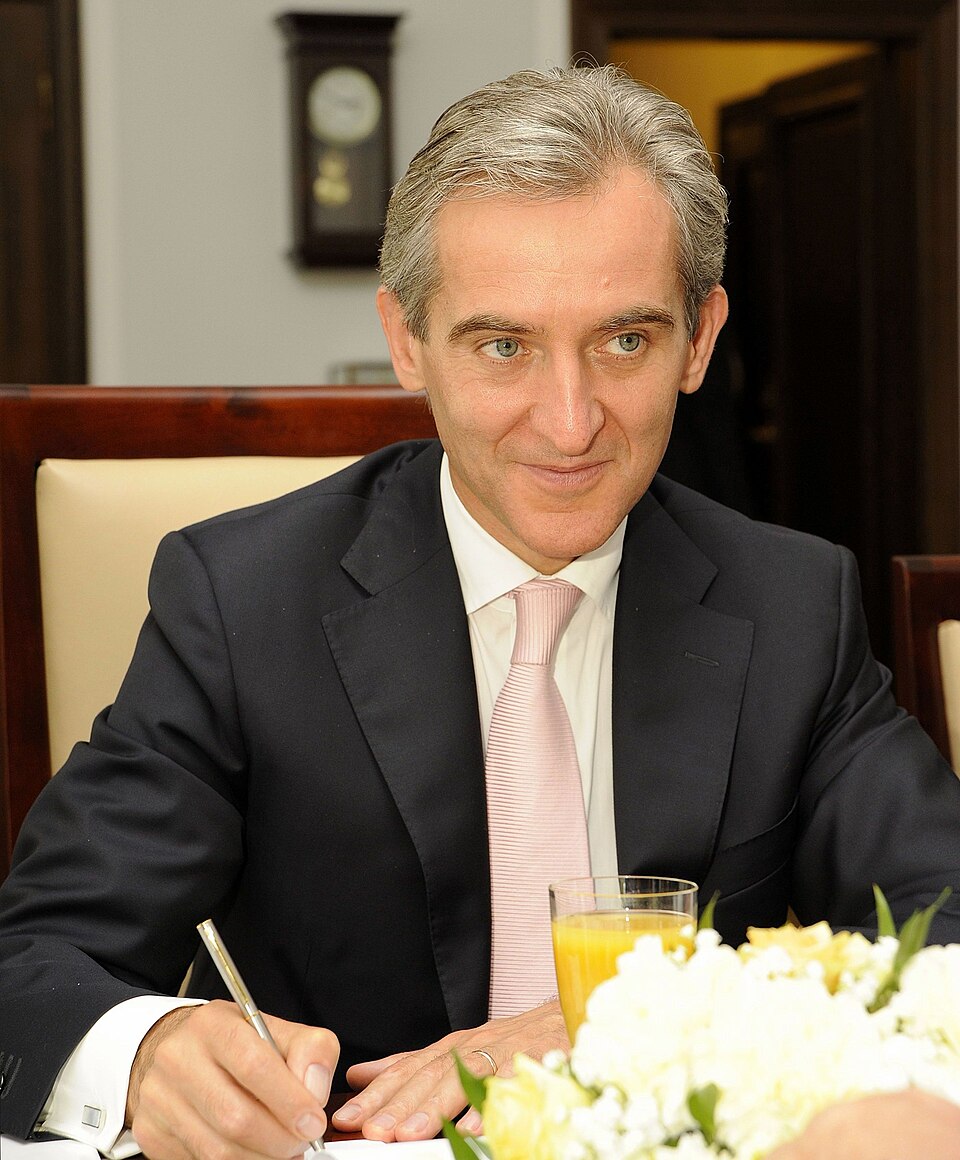

Prime Minister no. 9
Iurie Leancă
Term ended- Term duration
- 664 days
- PM affiliation
- Liberal Democratic Party
- Born
- 20 October 1963, Cimișlia, RSS Moldovenească
- Previous office
- First deputy prime minister and minister of foreign affairs and European integration (2009-2013)
Cabinet
Not officially confirmed
The points below come from the press or encyclopedias and could not be checked against Parliament decisions, decrees or the Official Gazette.
- According to alegeri.md, the government was in caretaker mode from 10 December 2014, and the investiture was on 31 May 2013. The acting period from 25 April 2013 comes from the designation decree.
- President
- Nicolae Timofti
- Political backing
- Pro-European Coalition (PLDM, PDM, PLR)
- How the mandate began
- A decree signed by President Timofti on 23 April 2013 named him interim prime minister from 25 April 2013, after the Constitutional Court ruled Vlad Filat's renomination unconstitutional; designated PM by Timofti on 15 May 2013; Parliament gave its vote of confidence on 30 May 2013 by 58 of 101 votes (51 needed), and the cabinet was sworn in on 31 May.
- How it ended
- After the 30 November 2014 election Timofti re-designated him on 28 January 2015 (official release, presedinte.md), but on 12 February 2015 Parliament refused to invest the new government (only 42 votes, 51 needed); the Gaburici government was invested on 18 February 2015 and sworn in the same day.
Events
- 2013: on 25 April he became acting PM, and on 30 May he was invested by 58 votes.
- 2013: in late November, at the Eastern Partnership summit in Vilnius, the EU Association Agreement was initialled.
- 2014: on 28 April visa-free travel to the Schengen area took effect for Moldovan citizens.
- 2014: on 27 June the Association Agreement was signed, ratified by Parliament on 2 July.
- 2014: on 24 July he received the Order of the Republic for his role in Moldova's political association with the EU.
- 2014: parliamentary elections were held on 30 November; the government continued as a caretaker.
- 2015: on 12 February Parliament refused to invest his new government (42 votes); on 18 February the Gaburici government was invested.
Cabinet composition
Cabinet composition: Leancă Cabinet 21 members
| Name | Position | Party |
|---|---|---|
| Iurie Leancă | Prim-ministru | PLDM |
| Tatiana Potîng | Viceprim-ministru pentru probleme sociale | PLR |
| Eugen Carpov | Viceprim-ministru pentru reintegrare | PLDM |
| Valeriu Lazăr | Viceprim-ministru, ministru al economiei | PDM |
| Natalia Gherman | Viceprim-ministru, ministru al afacerilor externe și integrării europene | |
| Veaceslav Negruța | Ministru al finanțelor | PLDM |
| Oleg Efrim | Ministru al justiției | PLDM |
| Dorin Recean | Ministru al afacerilor interne | PLDM |
| Vitalie Marinuța | Ministru al apărării | PLR |
| Marcel Răducan | Ministru al dezvoltării regionale și construcțiilor | PDM |
| Vasile Bumacov | Ministru al agriculturii și industriei alimentare | PLDM |
| Vasile Botnari | Ministru al transporturilor și infrastructurii drumurilor | PDM |
| Gheorghe Șalaru | Ministru al mediului | PLR |
| Maia Sandu | Ministru al educației | |
| Monica Babuc | Ministru al culturii | PDM |
| Valentina Buliga | Ministru al muncii, protecției sociale și familiei | PDM |
| Andrei Usatîi | Ministru al sănătății | PLDM |
| Octavian Bodișteanu | Ministru al tineretului și sportului | PLR |
| Pavel Filip | Ministru al tehnologiei informației și comunicațiilor | PDM |
| Mihail Formuzal | Guvernator al Găgăuziei | PRM |
| Gheorghe Duca | Președinte al Academiei de Științe a Moldovei |
Initial composition; later changes may be missing. Position titles are given in Romanian, as in the source. Source: alegeri.md (secondary source).
Education
Moscow State Institute of International Relations (MGIMO), 1981-1986.
Background
Party: Liberal Democratic Party of Moldova (PLDM) until February 2015; later European People's Party of Moldova (PPEM)
Iurie Leancă was born in 1963 in Cimișlia and graduated from MGIMO in Moscow. A career diplomat, he served at the Soviet embassy in Bucharest (1989), then in Moldova's foreign ministry, as counsellor at the embassy in the United States (1993-1997) and as first deputy foreign minister (1999-2001).
Between 2001 and 2009 he worked in the private sector (Ascom) and as an adviser to the OSCE High Commissioner on National Minorities. In 2009 he joined the PLDM and became first deputy prime minister and foreign minister in the Filat government, remaining the key figure of the European agenda.
He became prime minister in 2013, after the government crisis, at a time when rapprochement with the EU was the priority. Under his government the Association Agreement was initialled and then signed, and Moldovan citizens gained visa-free travel. After the November 2014 election his new government was not invested, and in February 2015 he left the PLDM.
After office
He left the PLDM on 26 February 2015 and founded the pro-European People's Party; he was deputy speaker of Parliament (June-December 2017), deputy prime minister for European integration (2018-2019) and ran in 2019 for the European Parliament on the PRO Romania list.